Source Adjustable Flexible Ankle Brace for Sports and Recovery
Find 30 adjustable flexible ankle brace options for basketball, football, and tennis. Compare breathable nylon and neoprene models from Chinese factories. View prices, MOQs, and customization services for adult unisex sport protection; compare the available evidence and request quotations based on your requirements.
Key considerations
Products List




Comprehensive Sourcing Guide
Adjustable Flexible Ankle Brace Sourcing Guide
Procurement teams must first distinguish between general sport protection and medical-grade immobilization when sourcing adjustable flexible ankle braces. The observed market data indicates a clear split between products designed for basketball, football, and tennis, which prioritize breathability and elasticity, and those intended for fracture fixation or deformity correction, which utilize rigid materials like aluminum splints or wood. Buyers should verify the specific "Protection Class" and "Usage" attributes to ensure the selected unit matches the intended activity, as a basic protection brace will not suffice for post-injury stabilization.
Commercial listings reveal significant variation in customization capabilities and minimum order quantities, directly impacting supply chain flexibility. While some suppliers offer a low MOQ of one piece for customized orders, others maintain higher thresholds for standard inventory. The presence of OEM/ODM services and logo customization options suggests a mature manufacturing base, yet buyers must confirm whether the "Customized" attribute applies to the specific model number or only to generic stock. Understanding these distinctions prevents mismatched expectations regarding lead times and production costs.
Product Scope and Observed Listing Signals
The product scope encompasses a diverse range of ankle support solutions, from basic elastic braces made of nylon and latex to complex external fixators incorporating neoprene and aluminum. Listings explicitly categorize these items by their primary function, such as "Sport Protection" for active adults or "Fracture Fixation" for medical recovery. Buyers must carefully review the "Product Type" and "Material" fields, as the distinction between a simple stabilizer boot and a rigid splint determines the appropriate application environment, whether it be an outdoor fitness session or a clinical fracture setting.
Observed listing signals highlight the prevalence of specific model numbers like JLY-T4765 and DNOR-F03, which often correlate with distinct material compositions and size ranges. Some entries specify "Free Size" while others offer S, M, and L options, requiring buyers to validate fitment strategies for their target demographic. The color variations, ranging from standard black to grey, and the packaging types, including OPP bags or color boxes, serve as secondary indicators of the product's market positioning and intended retail presentation.
Technical Specifications to Verify
Technical verification begins with confirming the structural integrity of the materials, specifically the blend of nylon, fiber, and latex for flexible models versus the rigid combination of foam, wood, or aluminum for fixation devices. Buyers should demand detailed specifications on the "Product Material" to ensure the selected brace offers the necessary elasticity for sports or the rigidity required for medical immobilization. The "Size" attribute, whether listed as "Free Size" or specific measurements, must align with the anatomical requirements of the end-user to prevent slippage or ineffective support during high-impact activities.
Functional attributes such as "Breathable" and "Elasticity Breathable" are critical for comfort during prolonged wear, particularly in outdoor sports environments. However, these features must be balanced against the "Protection Class," which ranges from basic protection to specialized fracture fixation. Procurement teams should verify that the "Product Feature" list accurately reflects the physical properties of the unit, ensuring that the advertised breathability does not compromise the structural stability needed for the specific "Usage" scenario, such as correcting deformities or stabilizing a sprain.
Compliance and Safety Documentation
Compliance verification requires a rigorous review of certification documents, with CE and ISO standards appearing as key markers of safety and quality in the observed listings. While some products explicitly list CE and ISO certifications, others may only reference a "uniform code" or generic standards, necessitating a request for official documentation to confirm regulatory adherence. Buyers must ensure that the "Certification" status applies to the specific model being purchased, as medical devices like external fixators often require stricter regulatory oversight than general sport protection gear.
Safety documentation should also address the "Condition" of the product, which is listed as "New" across the observed range, and the specific "Standard" codes provided by the manufacturer. It is essential to confirm that the "prod_standard" values, such as weight specifications of 150g or 400g, are consistent with the product's intended use and do not indicate substandard materials. Procurement teams should request test reports or quality assurance certificates that validate the safety claims, particularly for items marketed for fracture fixation or deformity correction where failure could result in severe injury.
Cost Drivers and Commercial Terms
Cost drivers in this category are heavily influenced by the level of customization and the complexity of the materials used. Products offering logo customization and specific packaging options, such as color boxes or neutral PE bags, typically command higher unit prices due to the additional labor and tooling required. The "MOQ" range, observed from 1 to 500 units, further dictates the unit cost, with lower quantities often incurring a premium for small-batch production runs, while larger orders may benefit from economies of scale in material sourcing and assembly.
Commercial terms must be clearly defined regarding the "Service" capabilities, specifically the availability of OEM and ODM support. Buyers should negotiate based on the "Customized" status of the product, as non-customized items may have different pricing structures and lead times compared to bespoke orders. The "Package" specifications, including whether the item is shipped in an OPP bag or a more elaborate carton, also impact logistics costs and should be factored into the total landed cost calculation to ensure budget accuracy.
Supplier Qualification and Quality Control
Supplier qualification should prioritize manufacturers with a verified "Company Type" of Factory, as this indicates direct control over the production process and quality assurance. The observed data points to origins in Shanghai and Hebei, regions known for textile and medical device manufacturing, but buyers must verify the specific facility's capacity to handle the required "Customization" and "Service" levels. A factory-direct relationship often ensures better communication regarding technical specifications and faster resolution of quality issues compared to trading companies.
Quality control protocols must be established to validate the consistency of materials like neoprene, aluminum, and nylon across production batches. Buyers should implement incoming inspection procedures that check for defects in the "Product Feature" list, such as ensuring the elasticity is uniform and the breathable properties are not compromised by poor stitching. Regular audits of the supplier's "prod_standard" adherence and "Certification" validity are essential to maintain product integrity, especially for items used in critical applications like fracture fixation or sports injury prevention.
Long-Term Procurement Checks
Long-term procurement strategies should include periodic re-verification of the "Product Model" numbers to ensure that the specifications have not changed due to material sourcing shifts or design updates. Suppliers may alter the "Material" composition or "Size" availability over time, which could impact the performance and fit of the ankle braces. Buyers must maintain a dynamic specification sheet that tracks these changes and requires immediate notification from the supplier of any deviations from the agreed-upon technical parameters.
Sustainability and supply chain resilience are also critical factors for long-term success, particularly given the reliance on specific materials like latex and fiber. Procurement teams should assess the supplier's ability to maintain consistent "prod_origin" and "Location" stability to avoid disruptions in the supply chain. Regular performance reviews based on the "Condition" of delivered goods and the accuracy of "Customized" orders will help identify potential risks early, ensuring a reliable partnership that supports consistent product quality and timely delivery.
FAQs
How does an adjustable flexible ankle brace provide support during sports?
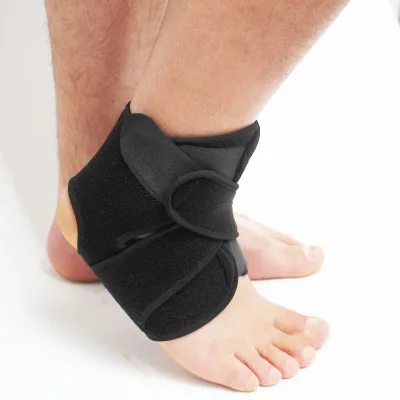
An adjustable flexible ankle brace supports the ankle through elastic, breathable materials with adjustable straps that let you set the compression level you need. This stabilizes the joint during basketball, football, tennis, badminton, or table tennis while keeping movement comfortable. Adults of either gender can wear it for outdoor sport and fitness, though it offers basic rather than rigid protection.
What materials are commonly used in these ankle braces?
These ankle braces are commonly made from nylon, fiber, and latex, which combine elasticity with breathability for extended wear. Some immobilizer models use neoprene with aluminum splints for firmer fixation, while foam and wood splint designs are used for fracture fixation. Material choice affects flexibility, weight, and skin comfort, so buyers should match construction to the intended protection level.
Can the ankle brace be customized with my own logo and packaging?
Yes, customization is available. Suppliers accept customized logos, and packaging can be tailored with options including OPP bags, color boxes, plastic bags, or neutral PE bags with cartons. Customized orders can start from a minimum of one piece, making small trial runs feasible. Discuss artwork, packing format, and labeling with the factory before placing a production order to confirm feasibility.
Which sizes are available for adjustable flexible ankle brace models?
Sizes vary by model. Some flexible braces come in a free size that fits most adults through adjustable straps, while immobilizer and stabilizer boot models are offered in S, M, and L. Since the braces are unisex for adults, check the specific model listing for its size option and confirm fit requirements with the factory before ordering customized quantities.
How much does an adjustable flexible ankle brace typically cost?
Listed prices on the product page range from about 0.75 to 18 US dollars, depending on the model, materials, and protection level. Basic elastic braces sit at the lower end, while stabilizer boots with splints cost more. Actual quotations depend on order quantity, customization, and packaging, so request pricing based on your specific model and volume requirements.
What is the difference between basic protection and immobilizer ankle braces?
Basic protection braces use elastic, breathable nylon-based materials to support the ankle during sports while allowing flexible movement. Immobilizer ankle braces are external fixators with neoprene and aluminum splints, designed for fracture fixation and correcting deformities with firmer restriction. Choose the flexible type for athletic activity and the immobilizer type for injury recovery or medical support needs.
Can I order samples before committing to bulk production?
Yes, customized orders can start from one piece, so you can order a sample to evaluate fit, materials, and workmanship before bulk production. Sample pricing may differ from volume pricing, and shipping costs apply. Review the sample for elasticity, breathability, strap adjustment, and packing quality, then confirm specifications with the factory before scaling up your order.
How should I choose the right ankle brace for my sport?
Match the brace to your activity and injury risk. For basketball, football, tennis, badminton, or table tennis, an adjustable flexible brace with breathable, elastic nylon material provides basic protection without restricting movement. If you are recovering from a fracture or need deformity correction, an immobilizer with splints offers stronger fixation. Consider weight, adjustability, and comfort for prolonged wear.